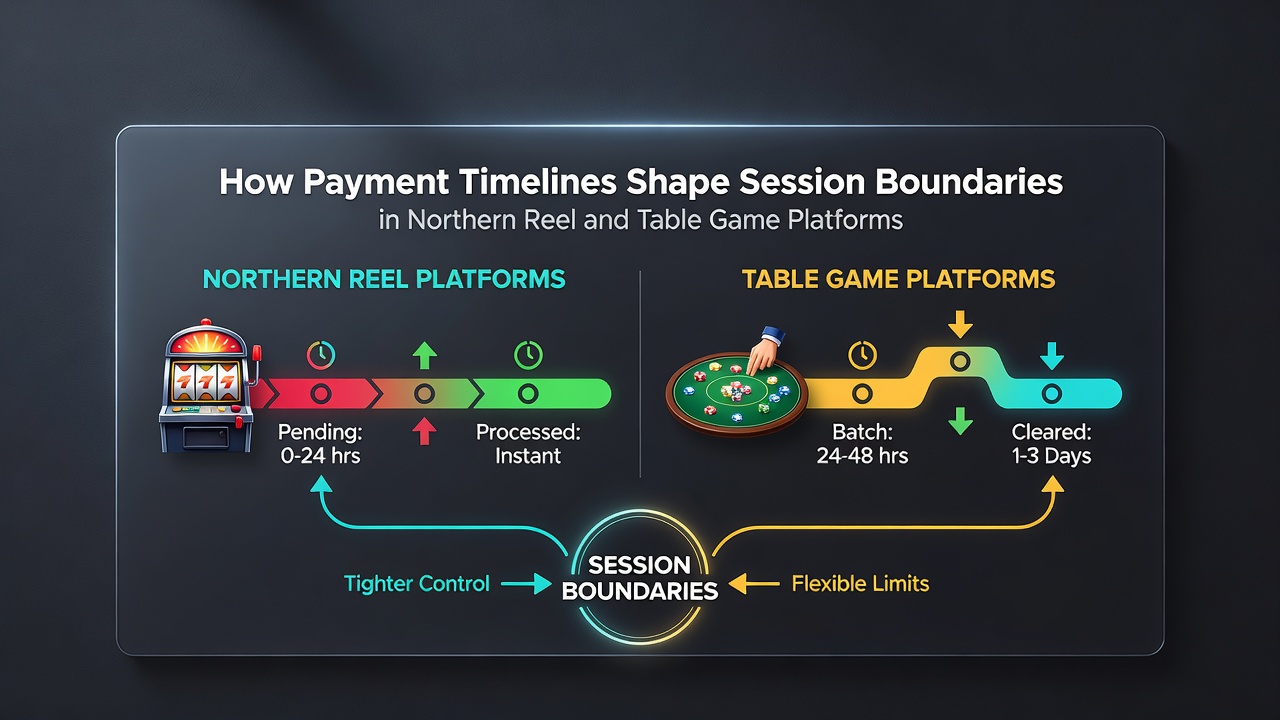
How Payment Timelines Shape Session Boundaries in Northern Reel and Table Game Platforms
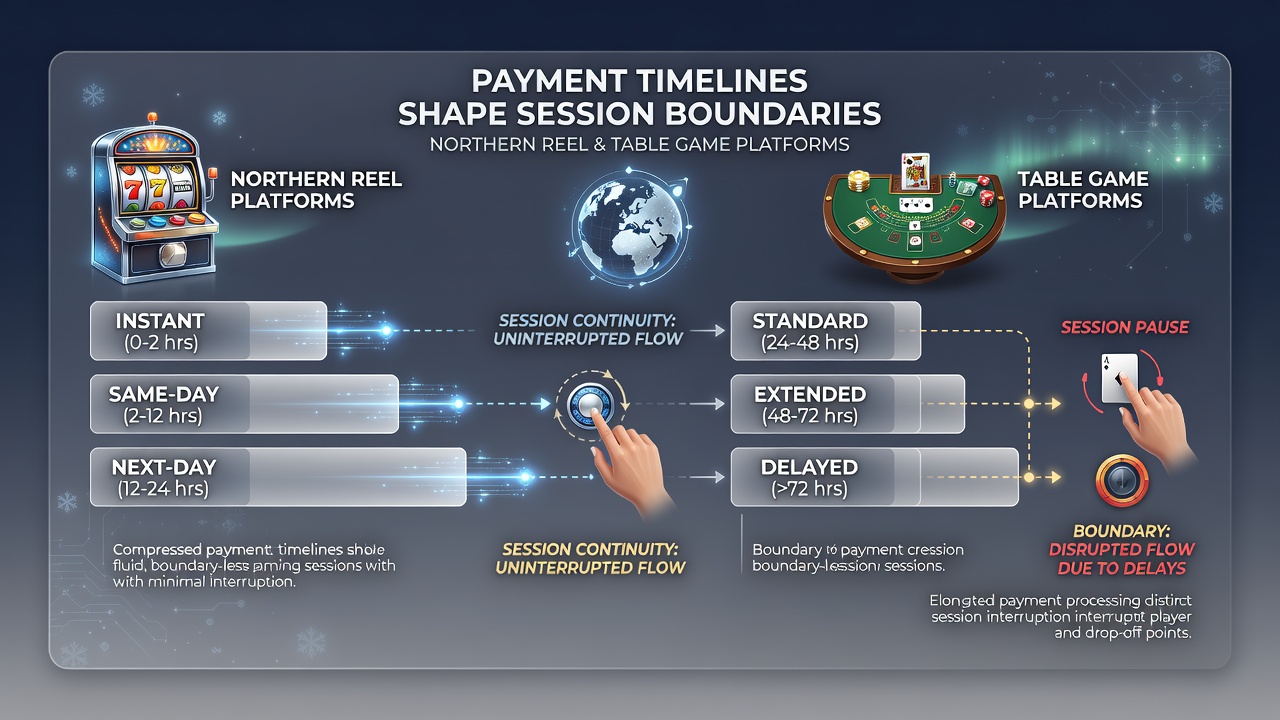
Payment processing speeds determine how players on northern reel and table game platforms establish start and end points for their gaming activity, with deposit confirmation times and withdrawal verification lags directly influencing session length and structure. Platforms operating in Finland, Sweden, and neighboring regions integrate real-time banking options alongside traditional transfers, creating measurable differences in how users plan their time at slots and card tables. Research from European gaming studies shows that instant payment rails correlate with shorter, more segmented sessions while slower methods extend the overall duration from login to cashout.
Deposit Confirmation and Initial Session Starts
Players initiate sessions once funds appear in their account balance, yet the interval between transfer initiation and credit availability varies by method and platform infrastructure. E-wallet deposits often clear within seconds on Nordic sites, allowing immediate entry into reel spins or live dealer tables, whereas bank wire options may require several hours or a full business day before play begins. Data from regulatory filings indicate that platforms using instant verification tools record higher volumes of brief morning or evening sessions, because users can align deposits precisely with available free time without waiting periods that stretch across multiple hours.
Table Game Dynamics Versus Reel Formats
Table game participants frequently monitor payment arrival more closely than reel users because table minimums and bet sizing require confirmed balances before joining a round. Reel sessions, by contrast, tolerate smaller incremental deposits that process quickly, enabling fragmented play patterns across the day. Observers note that payment delays push table game users toward consolidated evening blocks, while reel enthusiasts maintain multiple short entries when faster options are available.
Withdrawal Lags and Session End Points
Session boundaries close when players request withdrawals or when self-imposed limits trigger cashouts, yet verification timelines stretch or compress these endpoints. Faster payout approvals let users terminate activity cleanly once targets are met, whereas extended review periods keep balances active longer and can encourage additional spins or hands while waiting. Industry reports compiled across northern markets reveal that platforms with same-day withdrawal processing see earlier session closures on average, particularly among users who set daily loss thresholds tied to verified exits.
Regulatory Frameworks and Platform Adjustments
Northern regulatory bodies require platforms to display estimated processing times for all payment methods, which in turn shapes how users calculate session feasibility. Updates scheduled for September 2026 will introduce standardized disclosure formats across Finnish and Swedish operators, requiring real-time status indicators for deposits and withdrawals. These changes build on existing rules that link payment transparency to responsible gaming tools such as deposit caps and time reminders. Platforms that already display accurate timelines report greater user adherence to pre-set session durations because players can match payment speed to their calendar availability.
One study released by the European Gaming and Betting Association examined transaction data across multiple jurisdictions and found that regions with mandatory time disclosures experienced measurable reductions in extended continuous play periods. European Gaming and Betting Association reports further detail how payment method variety affects boundary setting, with faster options supporting tighter control and slower methods requiring additional planning buffers.
Player Behavior Patterns Across Payment Types
Those who rely on card-based deposits often schedule sessions around banking hours, creating predictable peaks during weekday afternoons and early evenings. Users preferring instant alternatives distribute activity more evenly, including late-night or weekend micro-sessions that begin and end within a single hour. Platform analytics shared in industry forums show that withdrawal speed influences return rates, with quicker exits correlating to higher likelihood of defined breaks rather than continuous re-deposits. Researchers tracking northern markets have documented that payment timeline awareness helps users align game choice with available time windows, favoring reels during brief intervals and table games when longer confirmed blocks are possible.
Conclusion
Payment timelines function as structural anchors for session boundaries on northern reel and table game platforms, guiding everything from initial access to final cashout across deposit and withdrawal stages. Regulatory developments planned for September 2026 aim to standardize time disclosures, which may further clarify these connections for users. Data collected from multiple sources, including academic reviews available through Canadian Centre for Gambling Research archives, continues to map how processing speeds intersect with player scheduling habits in regulated markets.